Private Label Skincare
Start with an existing Rixin serum formula, then confirm which ingredients, packaging, artwork, and order details can be adjusted.
Explore Private Label SkincareFor Skincare Brands
Develop a facial serum around the format, ingredients, sensory profile, packaging, target market, and commercial requirements.
For skincare brands: bring an existing formula, a reference product, or a new brief. We’ll review skin feel, package, testing needs, and label claims together.
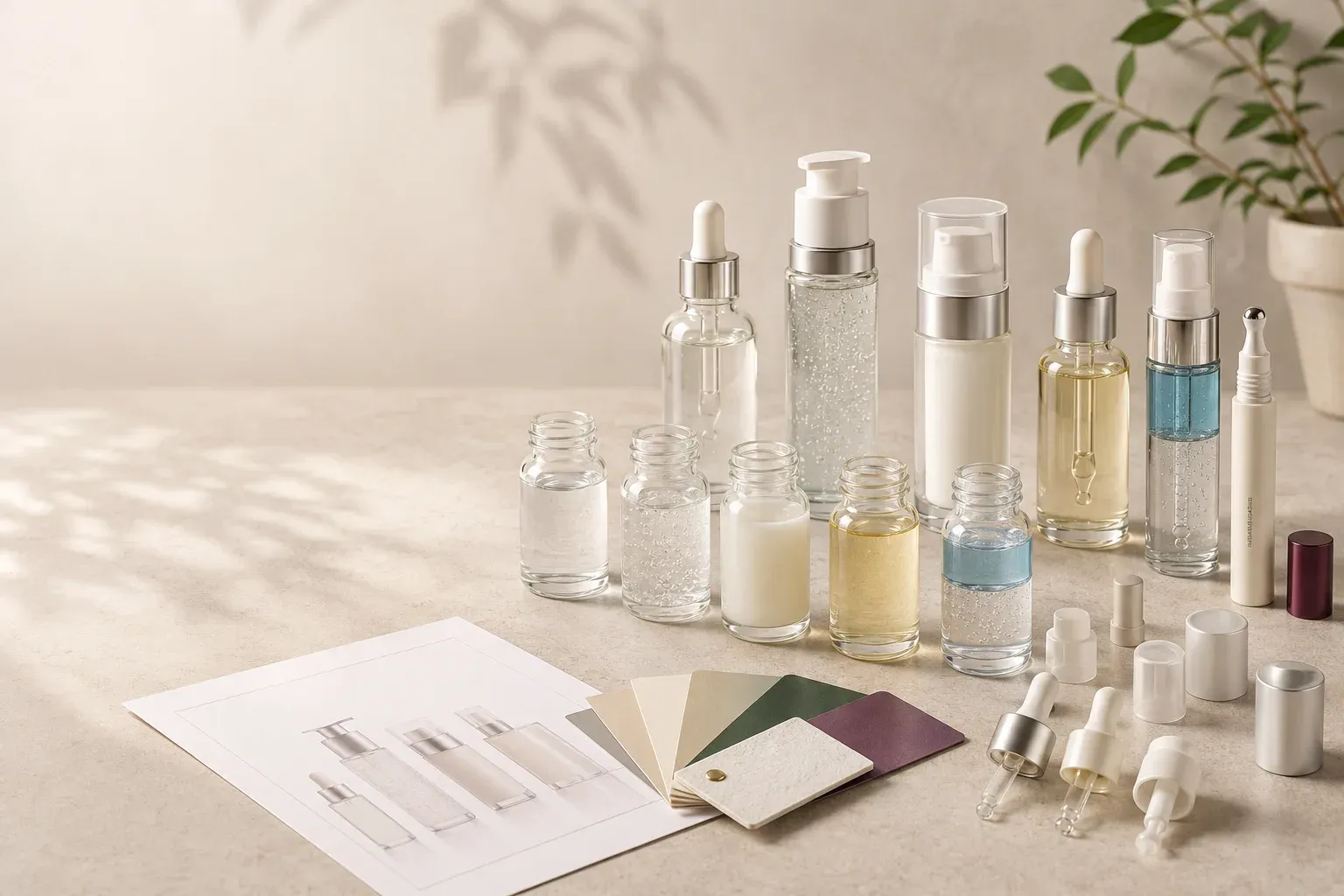
Choose Your Serum Development Route
Choose the route that matches how far your serum concept is already defined.
Start with an existing Rixin serum formula, then confirm which ingredients, packaging, artwork, and order details can be adjusted.
Explore Private Label SkincareChoose this route when you need a new or substantially changed formula, texture, ingredient system, or package. We’ll review feasibility before sampling.
Explore Custom Formulation & OEMNot sure which route fits? Discuss your serum project and we can review the starting point with you.
MOQ, Lead Time, and What Happens Next
These starting figures help you decide whether the project scope and timing are suitable before moving into formula and package detail.
Final requirements can depend on formula, package, printing minimums, product size, and variants.
This is the production stage, not a guaranteed delivery date.
Formula development, sample revisions, and other pre-confirmation work are outside that production stage. Packaging, materials, testing, target market, and project scope can affect the complete timeline.
Product Formats and Skin Feel
“Serum” can describe different structures and experiences. Defining the format gives sampling and packaging review a clearer target.
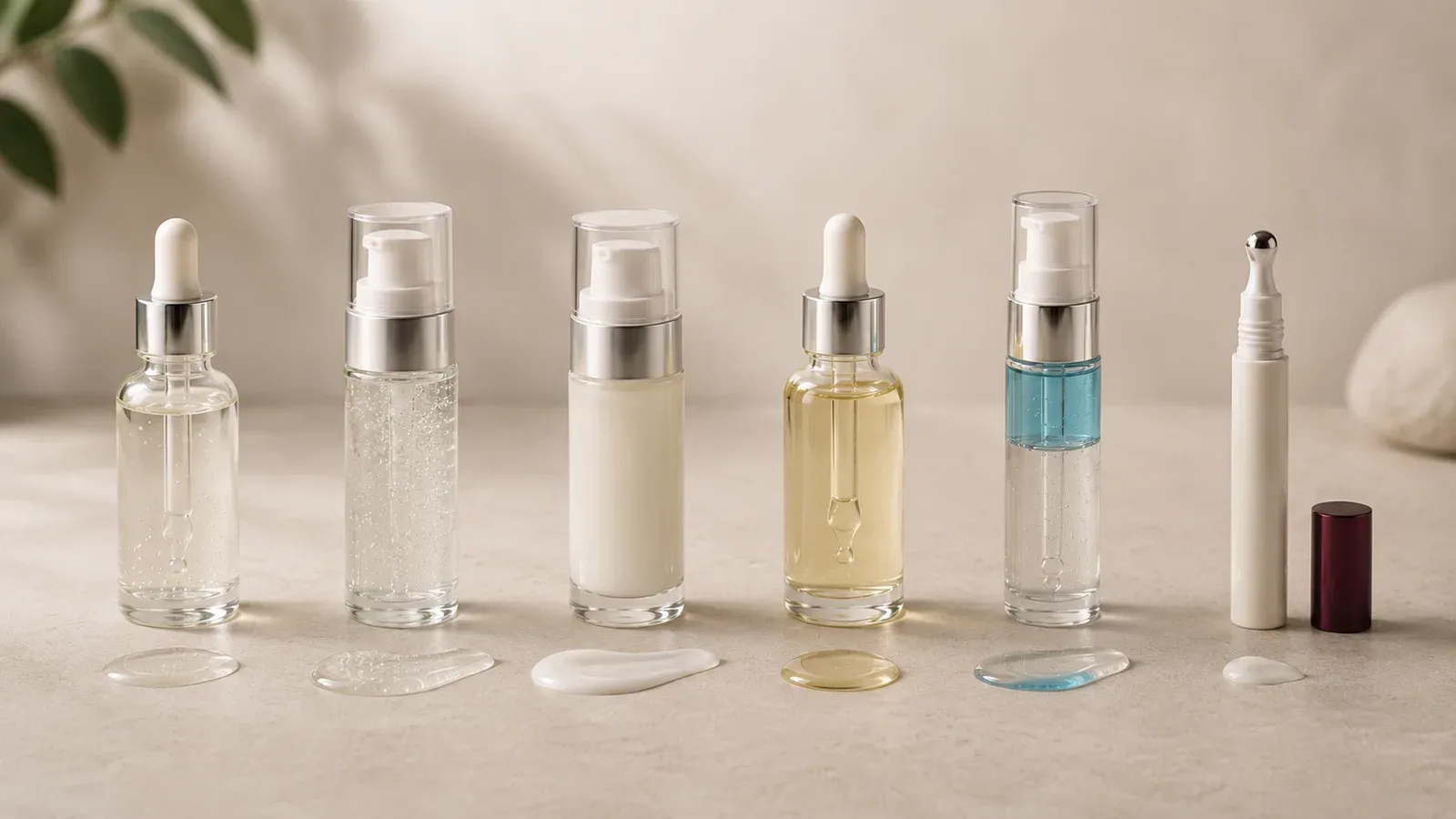
Lightweight or lightly viscous systems that may be clear, translucent, or opaque. Review absorption, tackiness, clarity, and dispenser suitability.
Structured formulas with more body and slip. Balance spreadability, dry-down, pilling risk, layering, and dispenser performance.
Light emulsion formats with a more cushioning feel. Stability, opacity, viscosity, filling, and pump performance should be evaluated together.
Anhydrous or oil-led systems requiring review of oxidation, odor change, drop size, leakage control, closure performance, and transport conditions.
Visibly separated systems designed to be mixed before use. Phase behavior, recovery, appearance, filling space, instructions, and package compatibility require review.
Targeted cosmetic formats with controlled application. Texture, dose, applicator choice, intended use, and market wording need specific assessment.
Formula Brief
A useful brief describes the intended experience beyond the word “serum.”
These choices affect formula structure, sample evaluation, dispensing, and the selected package. A reference can clarify the target without defining an identical result.
Ingredient Review
Serum projects may explore hydration, barrier-support, radiance-focused, age-supporting, or emerging ingredient directions.
Examples may include hyaluronic-acid systems, beta-glucan, panthenol, ceramides, niacinamide, tranexamic acid, suitable vitamin C derivatives, peptides, retinal, bakuchiol, or PDRN-related cosmetic concepts.
Ingredient choices need a feasibility check. We review the exact raw material and its INCI name (the standard ingredient name used on cosmetic labels), solubility, pH, formula compatibility, stability, package fit, testing evidence, target market, and supportable claims.
Supplier information does not establish finished-product performance or support every proposed claim.
Explore Skincare Ingredient DirectionsPackaging Fit
Options may include glass or plastic dropper bottles, treatment pumps, airless bottles, controlled-dose pumps, eye-serum packages, labels, and folding cartons.
Texture and viscosity affect dispensing. Formula-package compatibility means checking whether the formula dispenses properly and remains suitable in the selected package. A dropper is not suitable for every serum, and airless packaging does not replace compatibility review.
Review Packaging and Label Support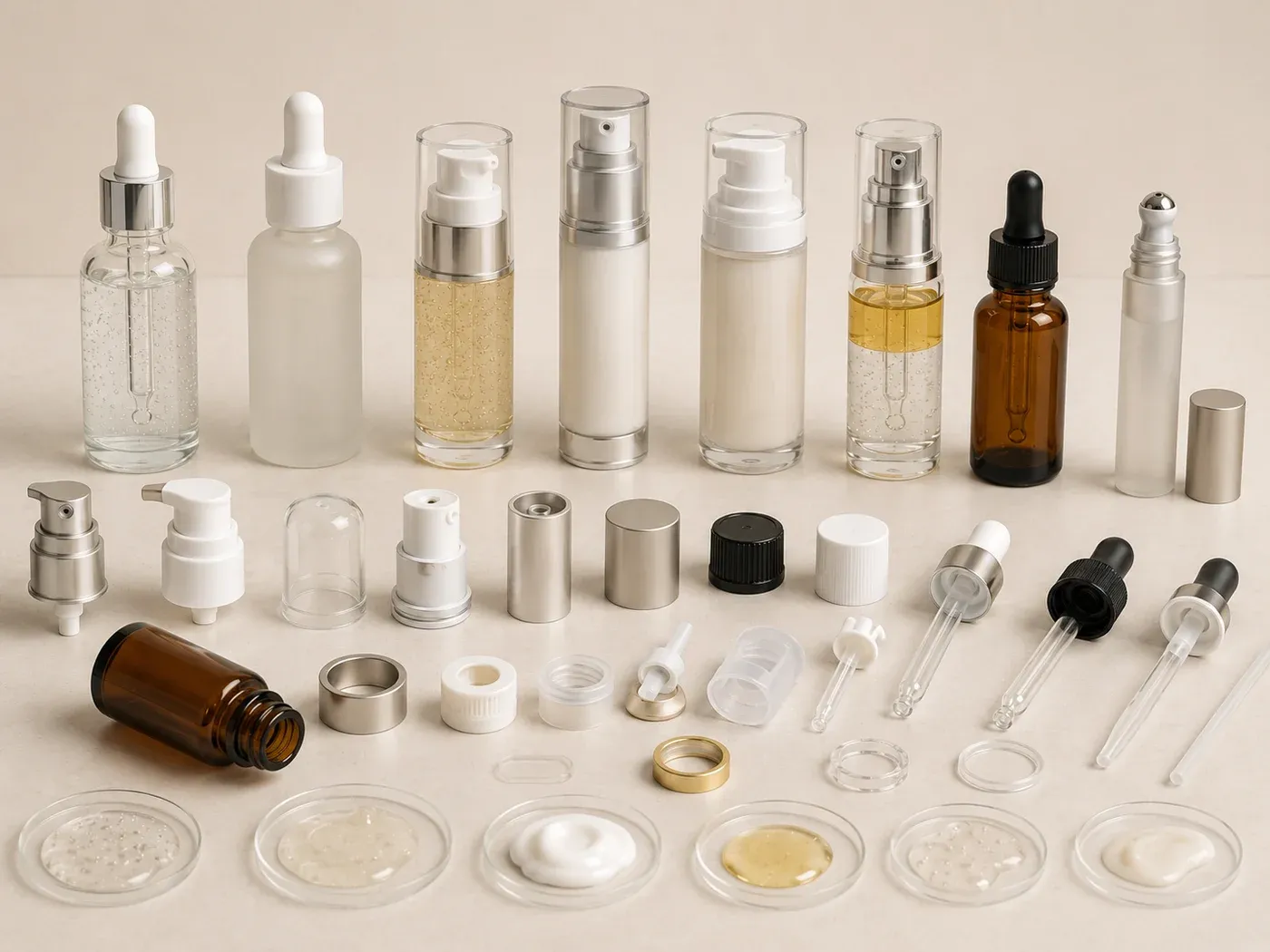
Testing, Documentation, Sampling, and Approval
Before production, we review whether the formula remains stable, works with the selected package, has the testing and documents the project may require, and supports the intended market claims.
Requirements depend on the confirmed formula, package, target market, and project scope. For an initial discussion, provide:
Buyer Questions
Yes. A reference can communicate viscosity, absorption, tackiness, dry-down, appearance, packaging, or positioning. It does not define an identical formula, ingredient system, or finished result.
Possibly, but the combination requires formula-specific review. Raw-material identity, solubility, pH, compatibility, processing, stability, packaging, evidence, target market, and proposed wording can affect feasibility.
There is no universal choice. The suitable package depends on viscosity, formula sensitivity, dose, filling, sealing, transport, and positioning.
Provide the target market, serum format, formula status, ingredient and sensory direction, references, packaging preference, quantity, testing needs, documentation requirements, and launch timing.
Rixin reviews the brief, suitable route, key feasibility questions, and the information needed to begin sampling. This discussion does not confirm that every formula, package, claim, or timing request is feasible.
Start With a Defined Brief
Share your target market, serum format, desired skin feel, ingredient priorities, packaging direction, quantity, documentation needs, and launch timing. We’ll review the suitable route and the information needed to begin sampling.
Request a Facial Serum Proposal