Hydration and Moisture Retention
Consider beta-glucan for formulas targeting hydration and less dry-feeling skin.
Beta-Glucan Skincare Development
Develop a beta-glucan serum, toner, moisturizer, or mask around the exact material—not the ingredient name alone. Rixin helps brands review source, supplied form, solubility, sensory behavior, packaging, documentation, finished-product testing, and claim direction for private label or custom projects, while keeping Ganoderma beta-glucan, Ganoderma extract, and Ganoderma-derived chitosan clearly separated.
Ingredient Direction
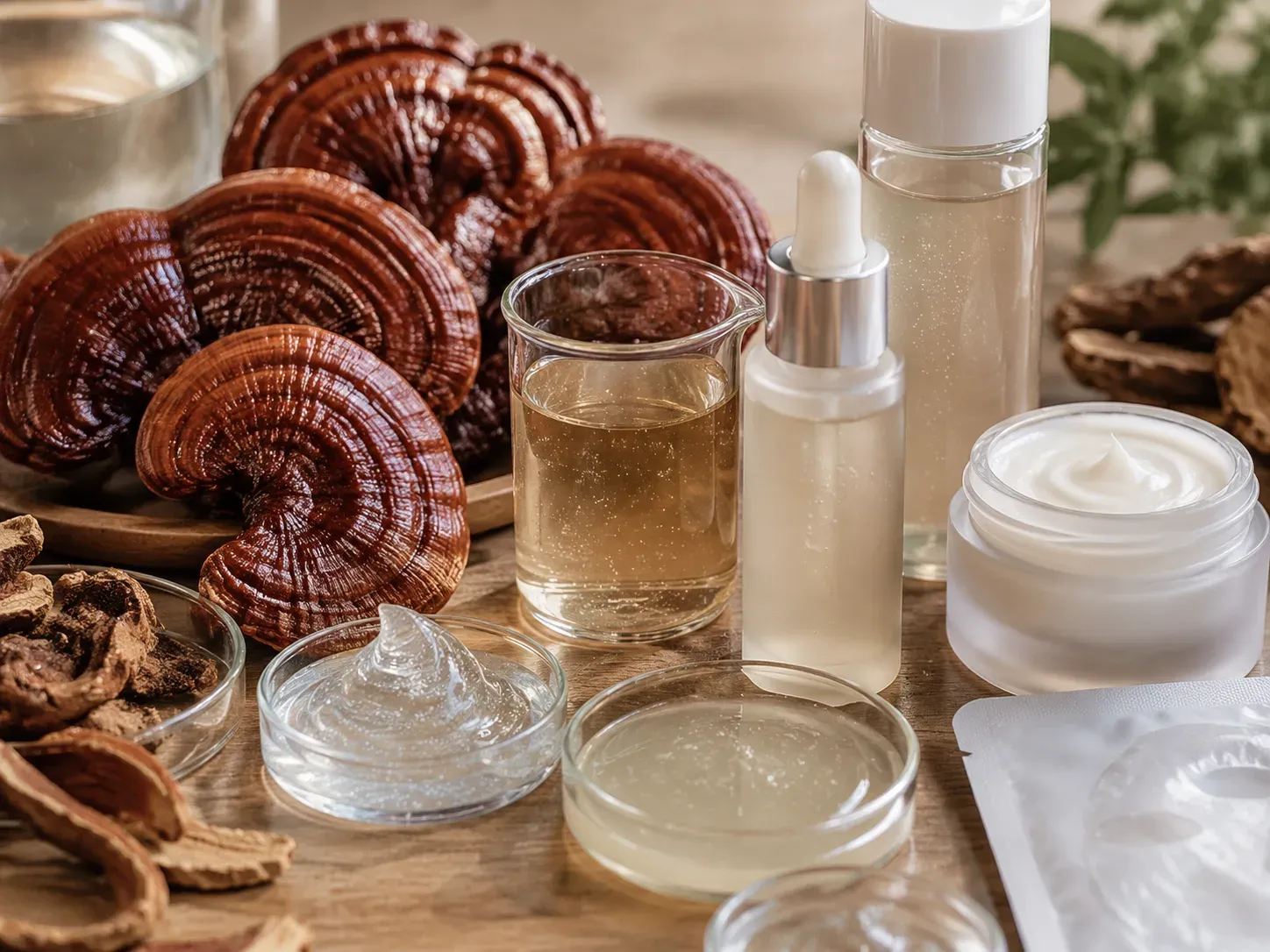
Beta-glucans are a family of glucose-based polysaccharides found in oats, yeast, mushrooms, and other sources. Their linkage pattern, molecular weight, branching, purity, and supplied form can affect solubility, viscosity, sensory behavior, and formulation use. For skincare development, confirm the exact source and commercial material before selecting the product format, formula system, evidence, and claim direction. Review the wider ingredient-development framework when comparing related directions.
Concept Development
Consider beta-glucan for formulas targeting hydration and less dry-feeling skin.
It can fit products designed for softer, calmer, or more comfortable-feeling skin.
It may complement humectants, emollients, lipids, and other skin-conditioning ingredients.
The selected material may affect viscosity, cushion, slip, tack, film, and after-feel.
These are development directions, not universal claims. Final wording depends on the material, formula, use level, finished-product evidence, label context, and target market.
Source Review
Often associated with mixed beta-(1→3)/(1→4) linkages. Review molecular characteristics, viscosity, clarity, color, residual cereal-related components, and supplier documentation.
Often associated with a beta-(1→3) backbone and beta-(1→6) branching. Commercial grades may differ in solubility, dispersion, particle form, purity, and processing guidance.
The proposal may involve isolated beta-glucan, a broader polysaccharide fraction, a Ganoderma extract, or a proprietary system. The source name alone does not establish the exact INCI or composition.
A supplier may provide a solution, dispersion, concentrate, or blend containing carriers and preservatives. Review the complete composition and active-content basis.
Source can influence material structure and commercial positioning, but source alone does not establish purity, solubility, performance, safety, or finished-product claims.
Material Review
Oat-, yeast-, mushroom-, or Ganoderma-derived beta-glucan, broader extracts, powders, liquids, and proprietary blends are not interchangeable. Match the brief to the exact supplier material before formula work begins.
Material Distinction
Ganoderma-related materials may share a fungal source story, but they are not interchangeable ingredients. Ganoderma beta-glucan is a glucose-based beta-glucan material or beta-glucan-containing system. Ganoderma-derived chitosan is produced from fungal cell-wall chitin through deacetylation. Each requires separate INCI, composition, specification, supplied-form, processing, compatibility, evidence, and claim review.
Review beta-glucan content, assay method, linkage or branching information where supplied, molecular characteristics, solubility, viscosity, clarity, tack, film, preservation, and carrier system.
Review molecular weight, degree of deacetylation, charge behavior, solubility, salt or derivative form, viscosity, compatibility, purity, residuals, and microbiological quality.
Fungal-derived chitosan begins with fungal cell-wall chitin; crustacean-derived chitosan commonly begins with shrimp or crab shell material. This source difference does not by itself prove superior purity, safety, skin compatibility, performance, or claim support.
Describe Ganoderma chitosan as fungal-derived or mushroom-derived, not plant-derived. Keep medical-dressing evidence and treatment language outside this cosmetic page.
Format Selection
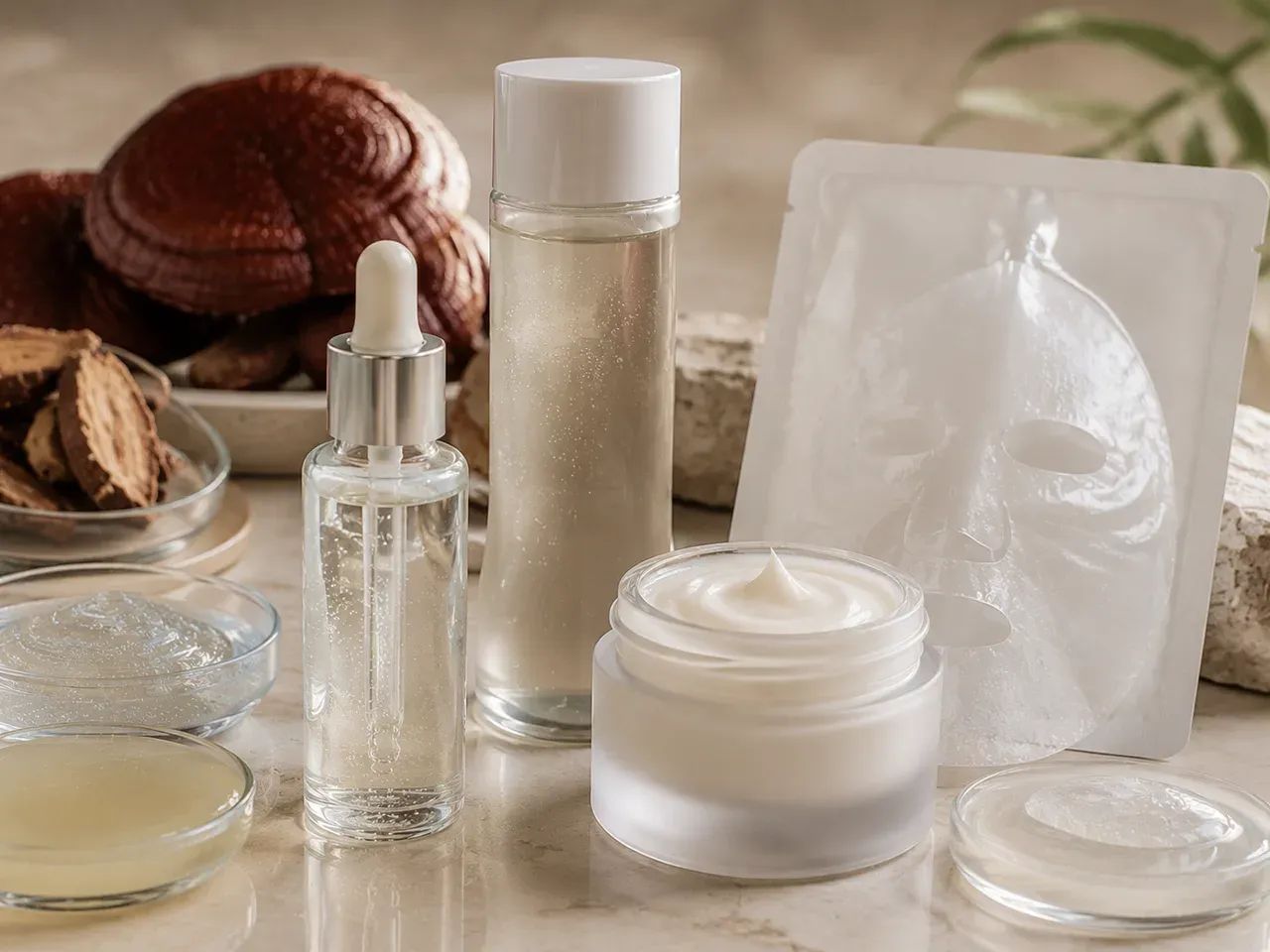
Review clarity or haze, viscosity, tack, supporting humectants, preservation, and pump or dropper delivery.
Review low-viscosity stability, solubility, sedimentation, color, odor, preservation, and dispensing choice.
Review emulsion compatibility, richness, after-feel, supporting lipids and humectants, preservation, and package selection.
Review essence viscosity, substrate compatibility, fill distribution, package seal, preservation, and finished-product stability.
Formula Development
The selected source, grade, supplied form, active-solids basis, and carrier system shape the development work. During formula development , review hydration time, agglomeration risk, dispersion, viscosity, clarity or haze, sedimentation, color, odor, tack, film, cushion, slip, residue, and absorption. Compatibility with pH, salts, electrolytes, surfactants, emulsifiers, and polymers also requires assessment. Preservation, microbiological control, scale-up sequence, formula–package compatibility, stability, and sensory evaluation should be planned around the complete product. Universal use levels, pH ranges, temperatures, processing times, or shelf-life promises should not be assumed from the ingredient name.
Evidence and Documentation
Research on one oat, yeast, mushroom, or Ganoderma material does not automatically support another grade. Supplier studies describe the tested material and conditions; they do not by themselves substantiate the finished formula. Medical-dressing or wound-care evidence cannot be transferred to ordinary cosmetic positioning. Final hydration, barrier-support, comfort, sensory, or sensitive-skin wording depends on the exact material, complete formula, use level, test design, intended use, label, and target market. Plan quality, testing, and documentation for the specific project.
Project Direction
Review whether an existing formula supports the requested material, format, sensory target, package, and claims.
Assess how material changes affect stability, sensory behavior, preservation, packaging, and existing evidence.
Build around the selected material, format, texture, package, target market, and testing scope.
Provide the target market, format, preferred source, supplier file, formula status, sensory target, package, quantity, claims, documentation needs, and timing. Review the project requirements before submitting the brief.
Frequently Asked Questions
There is no universal ranking. Suitability depends on the grade, supplied form, formula, sensory target, documentation, evidence, and market.
Not necessarily. An extract may contain multiple components, while beta-glucan may be isolated, standardized, or part of a broader system. Confirm the INCI and composition.
No. Chitosan is produced from chitin through deacetylation. It requires a separate material, formulation, and evidence review.
They may inform development, but claims require evidence relevant to the material, complete formula, use level, test design, label, intended use, and market.
Start With the Exact Material
Share your proposed source, supplier material, product format, sensory target, packaging direction, market, and claim goals. Rixin can review private label, formula-adjustment, or custom-development routes. Material availability, exact identity, feasibility, evidence, claims, and market suitability require project-level review.